On-Page SEO: Our Master Plan to Optimize Your Articles
On-page SEO is serving as a robust tool for businesses striving for effective digital visibility.
But why is it so?
Have you ever wondered why it has established such a strong position?
Let me explain!
We all know this is a digital era. Many customers now rely extensively on the internet, whether they need information or want to buy a specific product. To provide useful information and sell their products, website owners, business persons, and entrepreneurs need to boost their articles so that they might reach a broader audience.
One more thing!
During the research, I learned that over 8.5 billion searches are conducted on Google daily. Roughly 75% of users stick to the search engine’s first page, which means they don’t venture beyond the first one. So, your main target should be to land and establish a strong position on the first page of Google. This is when the useful strategies of On-page SEO yield fantastic results. So, let’s immerse ourselves in it.
This article will incorporate everything about On-page SEO, its importance, and the coordinated approaches we’ll apply to optimize your articles.
Concept of On-page SEO
What is SEO?
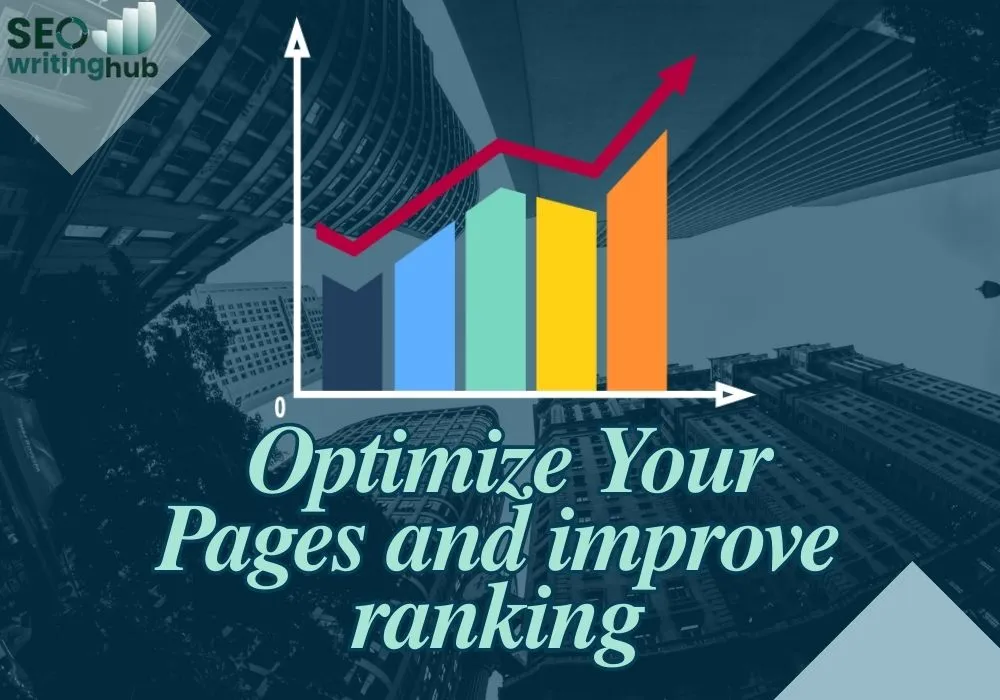
This famous term stands for “Search Engine Optimization.” It’s a procedure of applying various effective strategies that assist search engines in recognizing your content. The process ultimately improves your site’s visibility in search engines.
What is On-page SEO?
It’s also known as on-site SEO. In this process, we optimize our web page content to attain high ranking and top results in searches. This approach allows you to enhance search visibility easily.
Let’s see how it is different from Off-page SEO.
Difference between On-page SEO and Off-page SEO
On-page SEO:
This approach inculcates the techniques we can apply to our website to maximize visibility and improve ranking. Through on-page optimization, we set our web pages to optimize them for search engines.
Examples:
Meta description, title tags, keyword placement, internal links, etc.
Off-Page SEO:
This process incorporates the set of tactics we execute outside the website. As a result, we want to increase our site’s credibility and authority.
Examples:
Off-page includes guest posting, link building, etc.
Importance and Benefits of On-Page SEO in 2025
Even in 2024, on-page optimization is still in demand. Let’s explore its importance and some of its benefits.
- The very first thing that makes on-site SEO high in demand is that it facilitates search engine rankings.
- On-page SEO is also very beneficial in improving and increasing the organic traffic to your website.
- It’s also instrumental in building authority and trust.
- This approach also amplifies page load speed.
- On-page SEO also assists in upgrading user experience.
- It helps search engines recognize, crawl, and index your content.
On-Page SEO Process
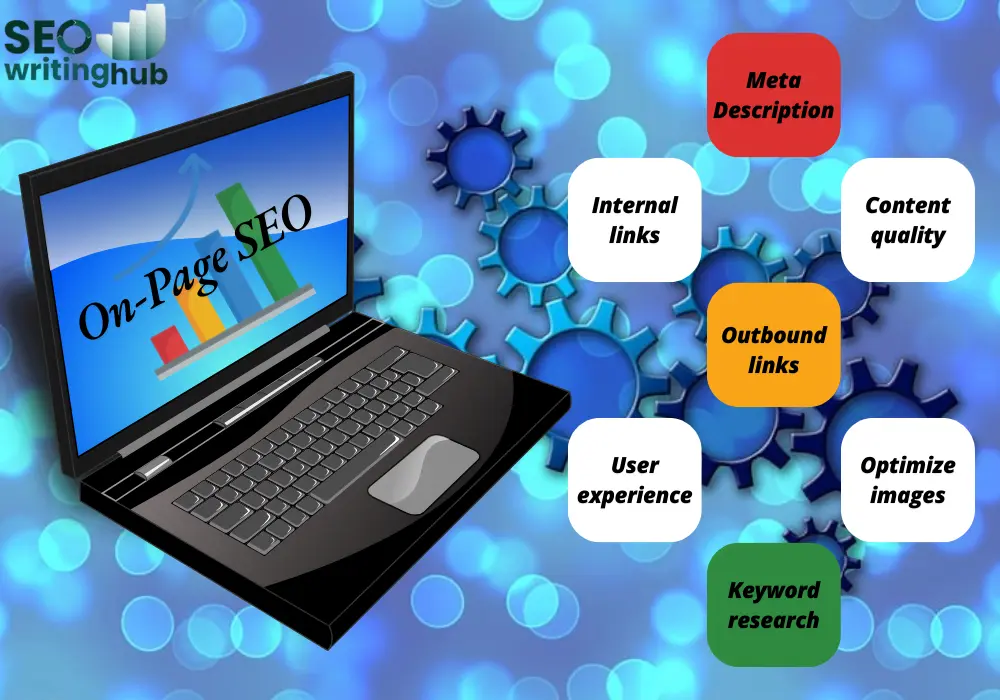
With digital transformation and tech advancement, grabbing attention and making an impression has become relatively tough. Now, we have to pass through more complex steps to get a higher ranking than in the past.
Let us explore some of the strategies that we implement on content. Applying these approaches will be progressively profitable and ever more rewarding for you.
Here are the elements of on-page SEO:
1. Keyword research is essential:
Keyword research is pivotal to laying the foundation of on-page SEO.
Let’s see why it’s the most significant step.
Discovering an appropriate keyword is the top factor to consider for several reasons, including:
- It’s valuable in comprehending the search intent.
- This step allows us to identify the words people are typing in the search bar to explore a product, service, or information.
- It brings light to profitable and traffic-generating long-tail keywords.
But do you know what type of keywords have improved usefulness?
No doubt, there are multiple things to consider while electing them.
However, narrowing down the keyword with high search volume and low competition will definitely bring ongoing benefits and sustained rewards.
That’s why we pick the most appropriate and relevant keywords so that Google can easily index them. We know very well that only in this way will the content appear to all those people who are searching for that particular query.
2. Generate Premium content:
Creating content of poor quality while neglecting search engine rules will never be advantageous. On the contrary, writing something of high quality to publish online and following search engine rules and principles will prove magical.
Furthermore, the content you’ll publish on your site should be original and manually written. AI has undoubtedly gained much popularity and made the process easier and simpler, but such content is never equivalent to human-written content. Here are some of the noteworthy elements we consider crucial while crafting our clients’ content. Let’s see which things are important to take into account and why.
- People-first content is more valuable.
- Engaging and insightful content will drive more traffic.
- Well-structured and easy to read.
- Well-written and well-researched content.
- Enhanced readability.
- Aligns with the Google’s E.E.A.T. criteria.
3. Keyword placement:
After producing thought-provoking, authoritative, and insightful content, the next step is to place those carefully and rightly chosen keywords. In fact, implementing keywords is the most important step of on-page search engine optimization.
Below is the list of your article’s section that should contain keywords:
- Image file name
- Image alt text
- Title
- Headings
- Meta description
- One time, in the 1st one hundred words
- Naturally, in the body
When implementing the keywords in the article or blog posts, two things should keep in mind:
- Keyword placement is done naturally.
- There is no keyword stuffing.
4. A compelling title:
Making a perfect title is crucial because this is the very first thing to attract users. The users’ click decision predominantly hinges on this aspect. Generally, the qualities of a good title are:
- Concise
- Relevant
- Clear
- SEO-friendly
- Engaging
Ensuring all the qualities mentioned above are present in a title brings about stellar outcomes. Furthermore, adding modifiers (Best, Proven, Beginner’s Guide, etc.) and incorporating keywords appropriately into the title will make it SEO-friendly.
5. Engaging Meta Description:
A click-worthy and perfectly written Meta-description yields astonishing outcomes in traffic growth. It does not have a direct impact on ranking. However, it is an encouraging factor. It appears under the title when you search it on Google. So, it should be action-driven and stimulating, urging the reader to click on your content. Here are some of the imperative instructions probably required to generate outstanding meta description.
- It should be managed between 155 to 160 characters.
- Adding keywords is also a good practice. However, it should not be applied a bunch of times.
- Using active voice is more appreciable.
- It should be descriptive.
- Incorporate action-oriented language.
- Make sure it summarizes the content of a page
- The meta description should be unique, and duplication should be avoided.
- Relevant to the content of your page.
- Avoid Clickbait and be clear.
6. Heading and subheading
Headings are highly valuable in organizing your content. They perfectly divide the article into multiple sections and remarkably help give your reader an idea of what is inside.
Concise, descriptive, clear, and compelling headings and subheadings will make your article immaculate and of supreme quality. In simple words, this strategy makes your content easy to read.
In a nutshell, these assist the readers in effortlessly scanning the content of your article. Hence, they’ll easily find the section of the article they want to read.
Here are some essential things to consider in this regard:
- Simple, descriptive, and persuasive
- Inserting the key term appropriately and naturally here will enhance the on-page score.
- Apply tags like H1, H2 appropriately.
7. URL optimization:
URL is one of the most crucial elements of on-site SEO optimization. It stands for “Uniform Resource Locator.” It’s basically known as the address of a specific web page and has a huge impact on search engine rankings. So, it should not be complicated. The more simple the URL is, the better it is. Besides being simple, it should also be descriptive. It should have words that match the content. In other words, it should have the keyword. The search engines will be able to crawl it easily and effortlessly.
- Avoid space between the words.
- Incorporate hyphens.
- Avoid unnecessary parameters.
- Keep it short, clear, and descriptive.
- Use lowercase letters.
- Use keyword.
8. Internal Links:
Embedding internal links is one of the most prominent factors of on-page SEO. Internal links are those that lead toward the other pages of the same site, and their significance is unquestionable. These links are truly constructive in pointing to the other pages of your site. So, it’s better to add links to fresh posts. Likewise, inserting links with popular posts is also a good practice. However, make sure the pages you join with the internal links should be relevant. At SEO Writing Hub, we know very well how to optimize anchor text and other best practices for internal links.
9. External Links:
Adding external links in the posts maximizes your page’s SEO score. Just like integrating internal links, external links also have value and significance. These are links that point to other sites. By embedding such links, you direct readers to other sites. This technique delivers amazing perks to your website in many ways, like establishing trust, enhancing credibility, and improving SEO. So, keep in mind that you should only link authoritative and reputable external sources.
Relevance is also a must. Therefore, always link to a relevant source. However, linking to a competing website is not considered a good practice.
10. Visual Content:
On-page SEO is incomplete without optimizing captivating visual content. Including visual content makes your article or blog more appealing.
Research highlights that almost 91 % of consumers lean towards visual content rather than written content.
According to studies, articles enriched with images receive 94 % more views than those which are purely text.
However, when inserting images, make sure that they are relevant to your topic. Perfectly optimized, high-quality, and relevant images elevate the chances of ranking in the Google images section. Adding alt text (alternative text) is a best practice.
11. Positive user experience
Besides all the on-page, as mentioned earlier rules, it’s also essential to work for a positive and better user experience. For this purpose, consider the following things:
- Verify its mobile friendliness.
- The page should be crawled and indexed
- The page speed of individual pages also matters.
Conclusion:
The value and importance of on-page SEO are clear-cut. It’s still a salient and dominant ingredient even in 2024. And with time, it’s proving to be a secret weapon and an absolute and certain method of maintaining a strong position in a saturated and dense marketplace.
Some of the advantages it provides to businesses are improving visibility, enhancing engagement, attracting organic traffic, and expanding profit margins.
Here at SEO Writing Hub, we’re dedicated to providing you with outstanding on-page SEO services so that you can fully enjoy its rewards and advantages to optimize your website.
Let’s share the knowledge
everyone deserves it!